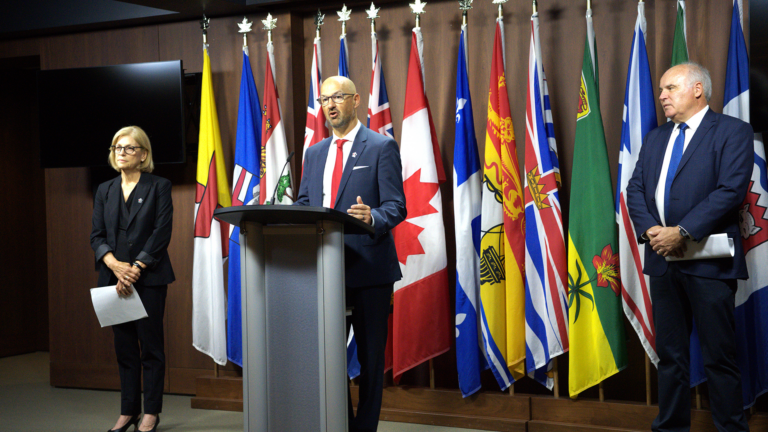


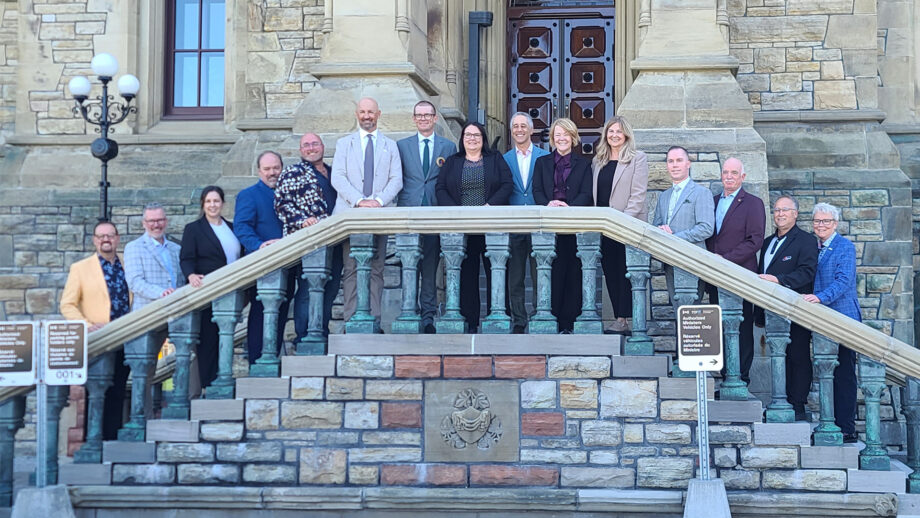
Ottawa, Ont. – The National Allied Golf Associations (NAGA) hosted its Hill Day in Ottawa on May 26th, to coincide with National Golf Day. NAGA delegates meet with Members of Parliament and Senators to highlight the Canadian golf industry’s unprecedented economic and social momentum.
As a coalition of Canada’s five major golf associations – Golf Canada; National Golf Course Owners Association (NGCOA) Canada; the Club Management Association of Canada (CMAC); Professional Golfers Association of Canada (PGA of Canada); and the Canadian Golf Superintendents Association (CGSA) – NAGA advocates for the sector with a single, unified voice.
Golf serves as a key pillar of the Canadian economy, generating more than $23 billion in total economic impact and $4.7 billion in tax revenues. The industry supports 239,000 jobs, including employment for 45,000 students annually, and helps to raise over $382 million for charitable causes.
“The sector has undergone a historic transformation since 2020. Today, golf is much more than a seasonal pastime; it has evolved into a year-round cultural force, an economic engine, and an accessible, mainstream platform for community connection enjoyed by over 6 million players,” said Kathryn Wood, Chair of NAGA. “Alongside these economic and social benefits, the industry is deeply committed to protecting and enhancing our role as stewards for the environment.”
Through sustainable turf management practices across 2,100 golf courses in Canada—90% of which are publicly accessible—the industry acts as stewards for almost 250,000 acres of greenspace, playing a leading role in wildlife conservation and carbon sequestration.
“As an accessible, outdoor activity for Canadians of all ages and abilities, golf serves as a primary vehicle for preventative health and social connection, particularly within rural and remote communities where local courses often act as the primary hubs for social infrastructure,” said Wood.
NAGA welcomes the opportunity to work with parliamentarians, senators and the public service to capitalize on the sport’s momentum by expanding accessibility for all Canadians, fostering industry-wide innovation, and bolstering the sector’s contribution to healthy communities, responsible resource management, and environmental stewards from the grassroots to the international stage.