Matt Wilson faced a tough decision that most people in their early 20s face — what to do for a career. Wilson had completed his undergrad at Long Island University and was weighing whether to further his education and enroll in law school.
A simple question from his mother provided the clarity he needed to pursue his true passion.
“Why don’t you figure out what you actually like to do?” asked Audrey Wilson of her son. “You’ve never mentioned this [law] as a path that you’d want to take anyways.”
Wilson knew his true passion was to hang out on a driving range and coach people. Audrey responded encouragingly and Wilson did just that, now coming up on almost 20 years as a coach and being someone to someone.
Mom always knows best.
Wilson’s path into coaching is one with a few self-described different on ramps that have converged into one point. Growing up, Wilson remembers having a coach that he looked up to and felt genuinely cared about him and his growth. That coach is Dave Woods, still instructing at Angus Glen Golf Club in Markham, Ont. and even gave a lesson to Wilson’s twin 8-year-old daughters to get them started in the game.
As Woods helped him develop as a golfer, his teachings also helped to shape Wilson’s approach to his own career and the pull of being someone to someone.
“One of the things that is paramount to me is having a really strong and genuine relationship with the players that I work with.”
Wilson has coached players who have experienced success on numerous pro tours including the PGA and LPGA Tours, at the national amateur level in Canada and the United States, from provincial, state championships to the AJGA and NCAA. Wilson remains in contact with many players he’s worked with along the way and enjoys seeing what those players have become.
“One of the big things that I strive to be as a coach is someone with range and the ability to work with a lot of players at different levels, and also be able to have the capacity and the competency to take them from a young golfer through junior golf, whether that’s locally, provincially, nationally, internationally, through college, entry-level pro, and all the way to ultimately the highest levels. And when I look at who are the coaches that I want to be like and the things that I want to accomplish as a coach, that’s paramount to me.”
Wilson describes his approach to coaching as “grounded in principles, not preferences.”
“There are common principles that are not rooted in, “I just like it this way.” These are not necessarily irrefutable, but these are observed best principles, not necessarily practices, that lead to success.
“I like to engage a lot with the sport sciences, biomechanics, sport psychology, strength and conditioning, all of those disciplines. They’re researched. There are best practices emerging from it. And those two things work together to just create principles. They’re not really, well, I think it should be this, or I think it should be that. They’re somewhat grounded in reality, grounded in science.”
Operating in that capacity, Wilson can process plans on a person-to-person basis, allowing him to apply principles that are unique to the person and not based on his preferences, helping to make them the best, most efficient versions of themselves.
For his work, Wilson has earned several notable accolades including being named to Golf Magazine’s Top 100 Teacher in America and Golf Digest’s Best Young Teacher in America as well as New Jersey PGA Teacher & Coach of the Year twice and PGA of Ontario Coach of the Year in 2018. While he appreciates the recognition, he has a very altruistic perspective to his work.
“My job is to help someone else, and my play in it or my portion of that is minimal compared to their efforts.”
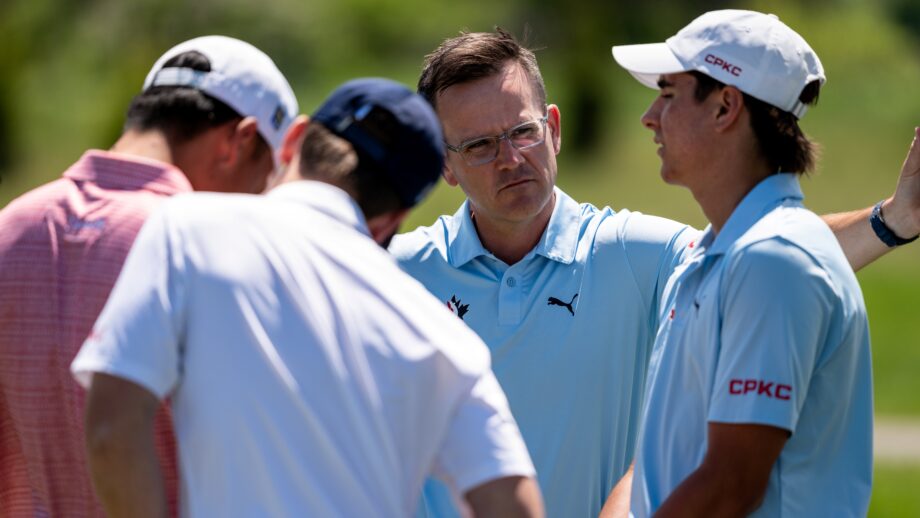
After nearly six years away, Wilson returned to Golf Canada last October. He previously spent three years as the head coach of the National Junior Girls team and director of NextGen Performance. He left to become the director of instruction at the prestigious Baltusrol Golf Club in Springfield, N.J.
Wilson was offered the head coaching role with the Team Canada NextGen Boys team in September 2025 and decided it was simply time to come home.
“Personally, it’s nice to be home. I am a very proud Canadian despite holding a U.S. passport and this is what I identify as home. Taking that a step further, I have a tremendous amount of pride in being Canadian and a tremendous desire to have a positive impact on Canadian golf.”
Along with the opportunity to return home, the task of building the next wave of Canadian golfers through the NextGen Boys team was too big to pass up.
“I thrive on complex problems that matter. That’s what I like to solve, things where the solution really, really matters. When I look at just the sheer task of trying to broaden and deepen a talent pool and ultimately have Canadian success at the highest levels be something that’s sustainable and very common, that gets me very energized,” said Wilson.
Heading into his first year at the helm, the goal was simple and straightforward.
“To instill an attitude of it’s not that we’re poor or bad or we aren’t up to the level. We just need to work. We just need help. What we’ve tried to do is really help the athletes see beyond their current level and raise their own internal standards. This is where I am, this is where I want to get to.”
Along with that, working to establish standards of behavior that players can be held accountable to help drive them forward.
“We give players the tools, provide them with the environment that is both push and pull, the more people that we can expose that to over the next decade, the better we’re all going to be.
“I don’t want to use the word culture, but really establishing a standard and a way of operating and things that we do, and hold ourselves accountable to being, that will allow the tide to rise.”
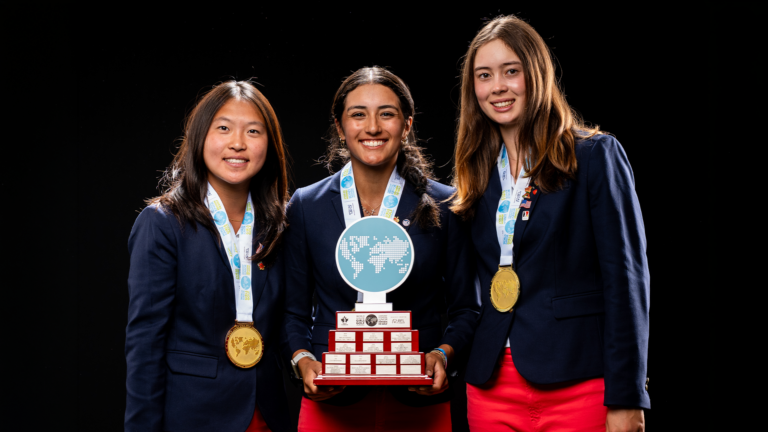
This past season, The Team Canada NextGen Boys team had much to celebrate, highlighted by Dawson Lew’s win at the 121st Canadian Men’s Amateur Championship, adding to his growing trophy cabinet that included the Canadian Junior Boys Championship a year prior. Alexis Rouleau added two more wins in addition to going back-to-back at the Team Canada NextGen Selection Camp in September to further cement his place for 2027. Rouleau along with Austin Krahn added top five individual finishes, while helping Canada finish T2 (tied for first but finished second due to a tiebreaker) at the prestigious Toyota World Cup in Japan along with teammate Eddie Gu. Krahn added his first collegiate win for Liberty University as a freshman last month.
“Our whole philosophy is helping to build all the tertiary skills that allow players to express their skills into a lower score on increasingly difficult golf courses. When we take that and zoom it out to the group, it’s important to see the growth in every person because that doesn’t often get reflected in the results. You’re going up against a higher standard and better players week in, week out so we must take a conscious approach to developing their schedules so it’s not all they experience. That aspect is important but at the same time you also need to see some results, and we were fortunate this year that we had a bunch of results that were great on paper,” reflected Wilson.
“I think if you go down the entire roster and you look at people who really grew and they developed some skill and some capacity in areas and started to look at the game a little bit differently and really start to play better more often even if they felt they didn’t have what they felt to be their best skills.”
In Wilson’s opinion, the NextGen program sits in a very interesting intersection when it comes to the development of high-level golfers.
“One of the analogies or images I share with the players and their parents is this image of a toll booth. It’s a 28-stall toll booth, 28 lanes and then it works its way down to four lanes and that’s where you get the essence of high-level competitive golf.”
“You’re trying to merge from a massive lane into one or two or three and it’s always this fight against reality that as you ascend, not only is the median level of performance better, so a higher standard but there’s compaction around that meaning everyone’s better, so everyone’s closer to it, separation is not only harder in an absolute sense, but its relative to your peer group.”
While he’s grateful to be home and proud of what the team has accomplished this past year, there is still plenty of work to be done to continue the momentum and upward trajectory in Canadian golf.
“There’s a tremendous amount of momentum, and momentum is magnetic. When you see the success and you see the evolution and all of the resources that are coming in, it’s very easy to get excited about the pursuit of the vision, because vision is one thing, and to have the resources, the tools, and the bandwidth to actually deliver on it is amazing.”
Closing in on 20 years in coaching, after following his mother’s advice to “just go do that”, Wilson continues to pour everything he has into the profession.
“To me, just the personal satisfaction that comes with being able to do that on the platform that I have so graciously offered here at Golf Canada is special to me. I wake up every day trying to think how I make this program better, how can I ensure that the kids and the athletes get exactly what they need so they can become the best versions of themselves.”